
Enterprise AI Workers (Internal A2A): Meet Your New Automated Workforce
While much of the market’s attention is captured by client-facing conversational interfaces, the most profound operational revolution is happening deep within the enterprise backend. Organizations are shifting away from static software tools toward Enterprise AI Workers.

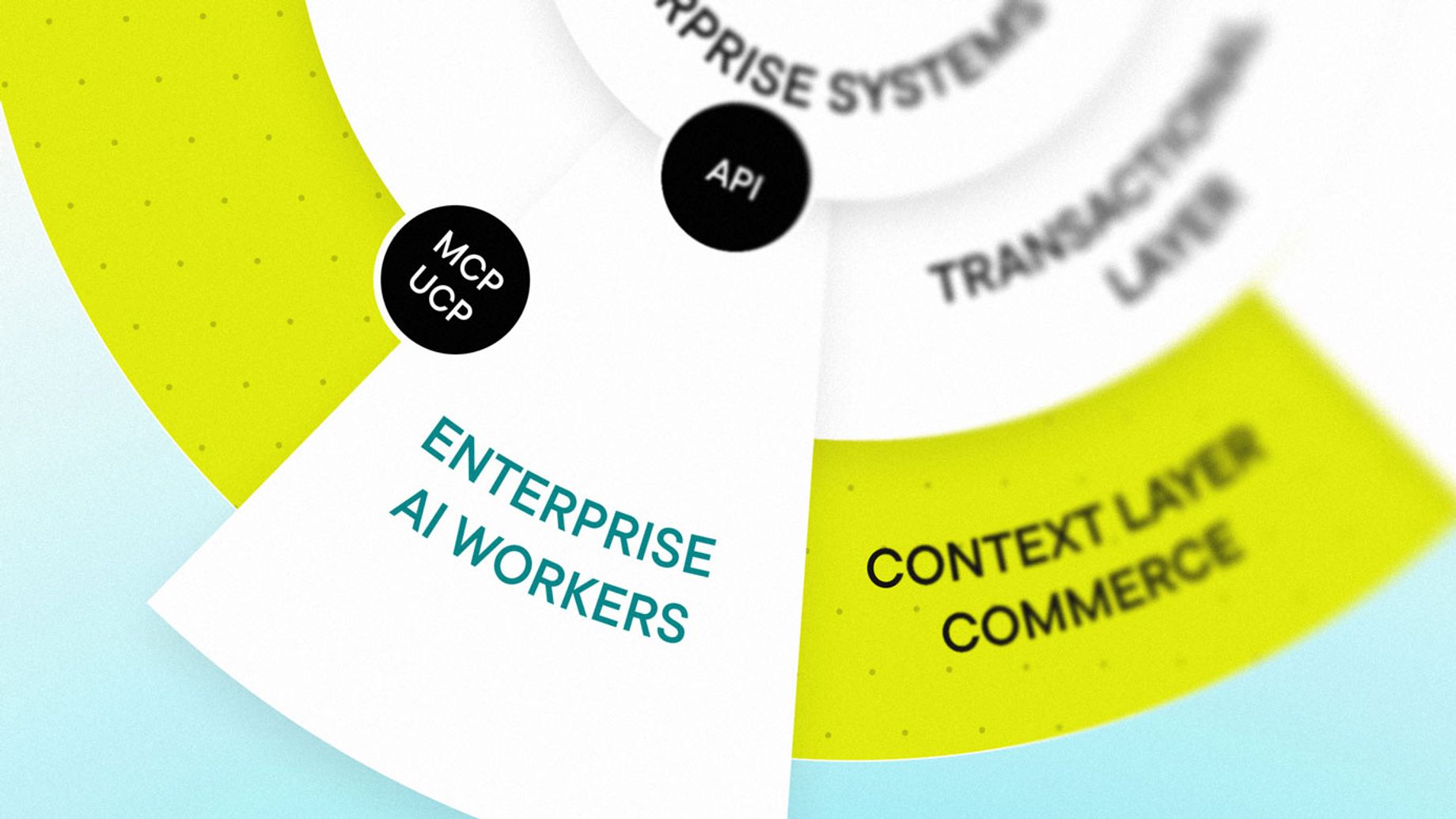
This is also the era of Internal Agent-to-Agent (Internal A2A) commerce, where autonomous agents are deployed across internal operations to execute workflows, optimize processes, and manage data across different business units without requiring constant human engagement.
Driving the Autonomous Backend
For years, operational efficiency in digital commerce was throttled by departmental silos, manual data lookups, and slow handoffs between teams. Enterprise AI Workers fundamentally redefine this dynamic. By shifting backend tasks from human execution to autonomous intelligence, organizations can achieve a new baseline for operational agility.
The Strategic Role
This dramatically drives operational efficiency, slashes overhead costs, and introduces true real-time decision-making to complex backend commerce operations.
The Paradigm Shift
Instead of humans monitoring dashboards to make decisions, human operators shift into an oversight role, steering autonomous systems that execute at scale.
The Internal Tech Stack: Infrastructure & Interfaces
Deploying functional AI workers requires moving beyond generic, isolated chat prompts.
It demands an interconnected enterprise infrastructure designed for machine-to-machine execution:
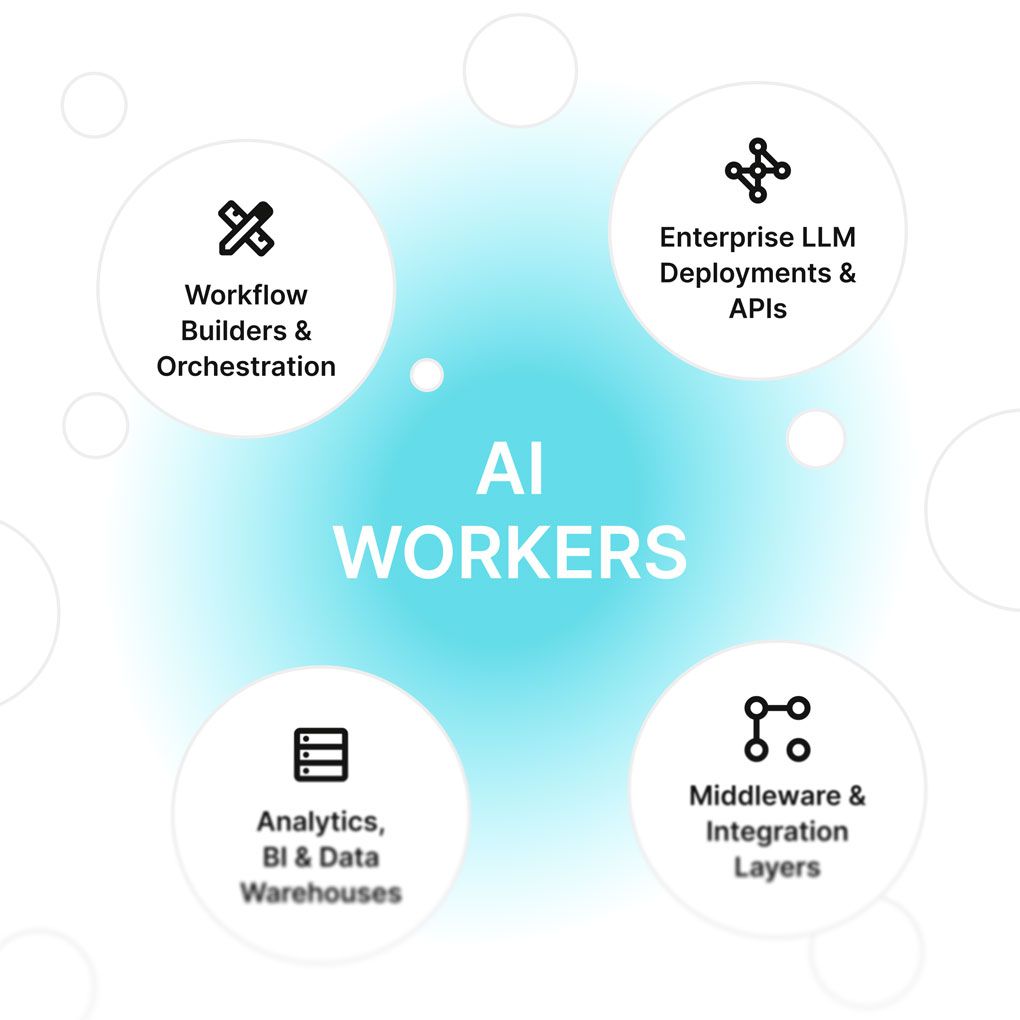
- Workflow Builders & Orchestration: The frameworks used to model, test, and deploy multi-agent processes.
- Enterprise LLM Deployments & APIs: Secure, private LLM instances optimized for internal data privacy and high-throughput API calls.
- Analytics, BI & Data Warehouses: The foundational data layers where AI workers extract telemetry and historical performance metrics.
- Middleware & Integration Layers: The digital nervous system allowing AI agents to seamlessly write and read data across ERP, CRM, and PIM systems.
Sample Use Cases Redefining Backend Commerce
When given autonomous execution capabilities, Enterprise AI Workers transform the most critical pillars of commerce operations:
Dynamic Merchandising & Pricing
Internal agents continuously monitor competitor pricing strategies, market trends, and internal inventory levels. They adjust prices dynamically and optimize digital product placement on storefronts in real time to maximize margin.
Marketing & Content Automation
Autonomous creation, A/B testing, and continuous optimization of multi-channel marketing campaigns, personalized email copy, and high-converting product descriptions at infinite scale.
Supply Chain & Inventory Optimization
AI workers predict localized demand spikes, autonomously reorder stock from suppliers before shortages occur, and route logistics dynamically to minimize delivery times and warehousing overhead.
Customer Service Triage
Resolving complex customer disputes without human intervention by autonomously accessing order history, tracking shipping data, and evaluating return policies to make immediate, compliant decisions.
Connecting it all: The Commerce Context Layer (CL)
For internal AI workers to operate safely and effectively, they cannot guess or rely on fragmented data. They require an unshakeable foundation of truth.
This is where the Commerce Context Layer (CL) becomes the ultimate strategic leverage point, acting as the centralized repository of enterprise knowledge that feeds these agents clean, verified, and contextualized business data.

The Benefit for Your Customer While AI workers operate strictly within the backend, the ultimate beneficiary is the end customer. When internal agents have frictionless access to enterprise knowledge via the CL ,the core customer benefits are unprecedented response speed and service quality.
Issues that previously took hours or days due to manual lookups, departmental handoffs, or information gaps are now resolved in seconds.
Whether it is a dynamically updated price, a perfectly timed supply chain adjustment, or an instantly approved customer service dispute, the customer experiences an organization that is always informed, completely consistent, and capable of acting immediately on their behalf.
Claim the Operational Mandate
The future of enterprise commerce belongs to companies that can execute faster than human bandwidth allows. Investing in Enterprise AI Workers powered by a robust Commerce Context Layer is no longer an innovation project. It is a foundational requirement to build a hyper-resilient, friction-reduced digital business.
Related Posts

Time to Celebrate! First Place in Vector Search at the SISAP 2026 Indexing Challenge
