
The Emergence of the Agent Community & Ecosystem
We are now crossing the threshold into a radically different paradigm and a new AI commerce environment: The Agent Community & Ecosystem, powered by Inter-Organizational Agent-to-Agent (A2A) Commerce.

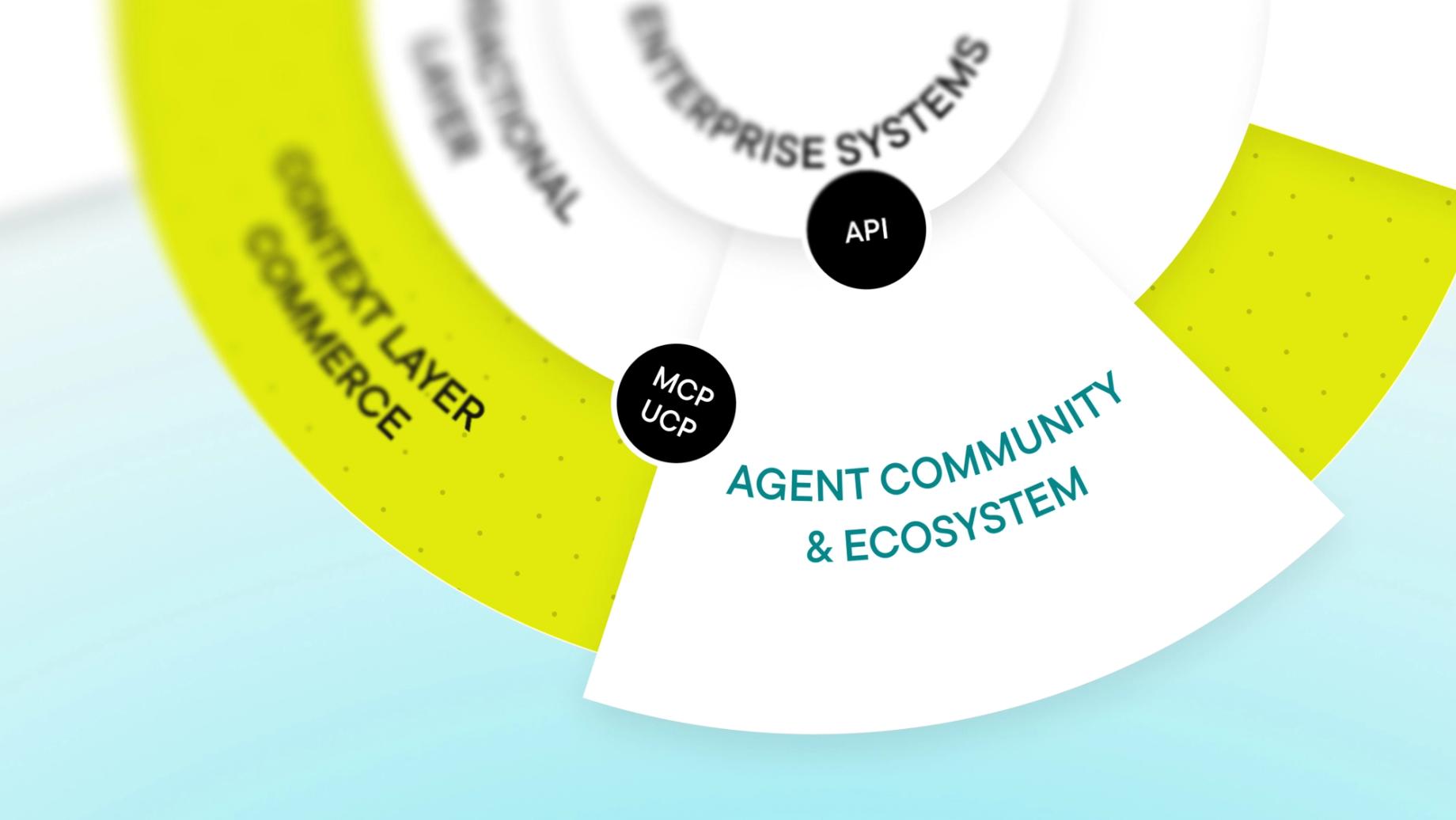
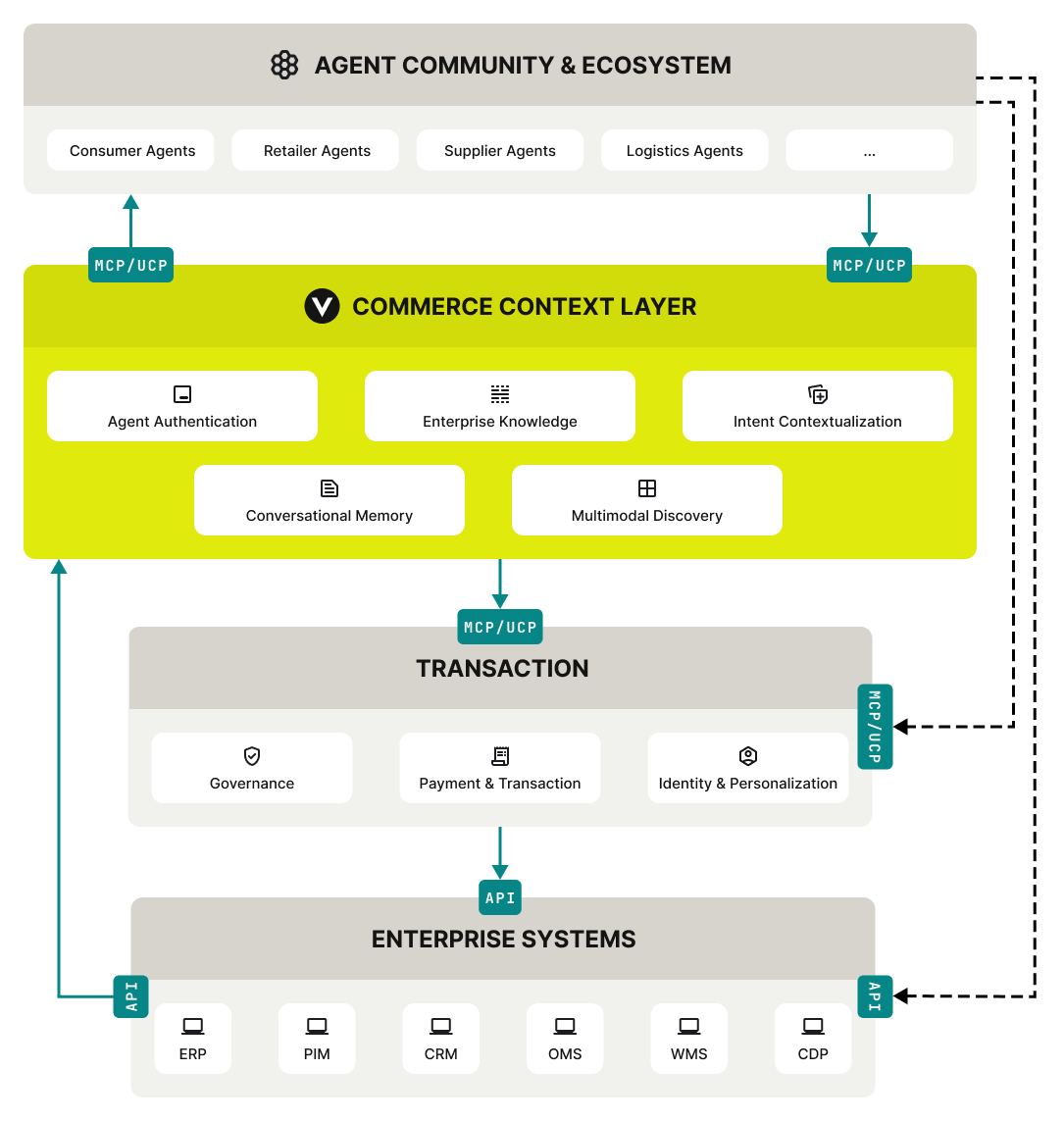
This is not just about an internal AI worker optimizing a backend or a customer chatbot answering a query. This represents the rise of a decentralized, machine-readable network where entirely independent AI agents (representing consumers, retailers, suppliers, and logistics providers) communicate, negotiate, and transact with one another autonomously.
Defining the Inter-Organizational Autonomous Market
The Agent Community is a decentralized web of intelligence. In this ecosystem, supply and demand are matched instantaneously. Instead of static digital storefronts waiting for human clicks, multi-agent systems engage in real-time programmatic micro-negotiations.
The strategic role of this environment is to eliminate market friction entirely. When independent agents represent every node of the value chain, economic inefficiencies disappear, e.g. delayed procurement cycles, information asymmetry, and manual administrative overhead. The market transitions from a series of batch processes to a fluid, continuous, and self-optimizing system.
The Infrastructure Empowering the Machine-to-Machine Marketplace
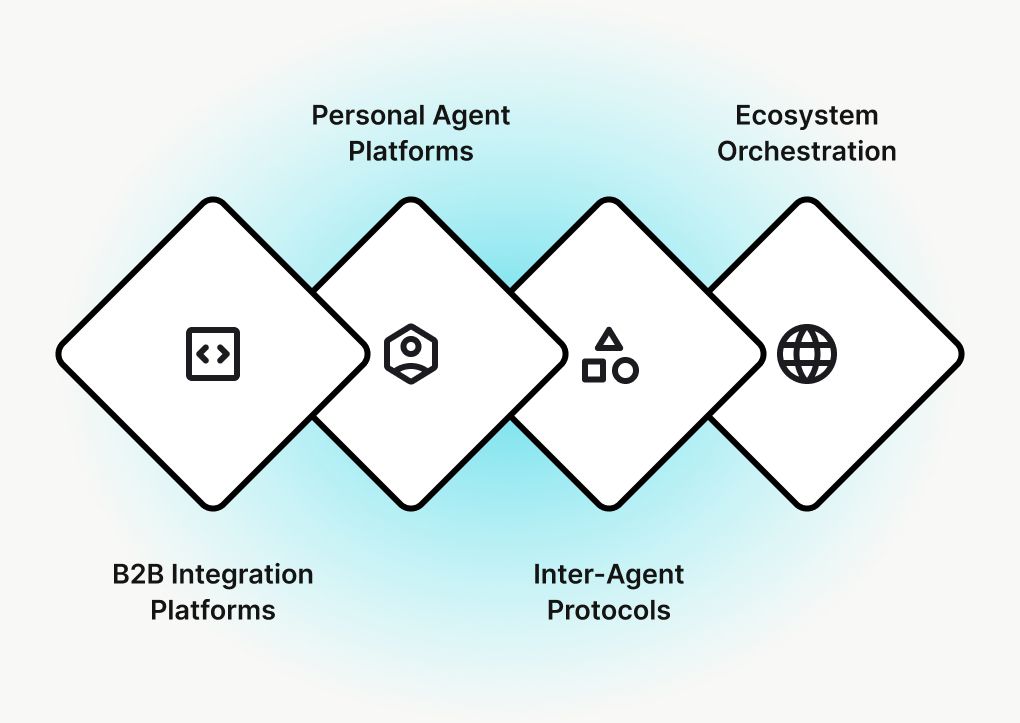
Deploying an enterprise strategy within an open agent ecosystem requires shifting away from rigid, single-purpose API integrations. It demands a sophisticated, multi-layered technological framework designed for secure machine-to-machine communication:
- Inter-Agent Protocols: Standardized, secure communication frameworks that allow disparate LLM-driven agents to authenticate, exchange structured data, and verify cryptographic trust across organizational boundaries.
- B2B Integration Platforms: Distributed middleware that enables enterprise agents to safely read from and write to internal ERP, CRM, and supply chain systems while interacting with external agent networks.
- Personal Agent Platforms: Secure consumer-facing environments where individual AI assistants manage user preferences, biometrics, financial tokens, and operational mandate constraints.
- Ecosystem Orchestration: The governance structures and decentralized discovery ledgers that allow agents to find, evaluate, and benchmark other qualified operational agents in real time.
Examples of Emerging Use Cases Driving the Autonomous Market
The core of the Agent Community lies in its execution. When given autonomous mandates, independent AI agents fundamentally re-engineer how trade, procurement, and lifestyle management operate across organizational boundaries.
1. Cross-Enterprise Supply Chain Synchronization
Modern supply chains are highly fragile, vulnerable to fragmented data silos, delayed notifications, and external shocks. When supplier and retailer agents communicate directly, the supply network shifts from a reactive model to an organic, self-healing loop.
- The Execution: Retailer agents managing localized store networks constantly trade inventory telemetry with supplier agents. If an unpredictable disruption occurs, the retailer and supplier agents instantly sync, for example, a major weather anomaly delays a container ship or a localized demand spike wipes out regional inventory.
- The A2A Value: Rather than waiting for a human manager to flag a bottleneck, review spreadsheets, and email a supplier, the retailer agent automatically requests a reallocation from alternative supplier hubs. The supplier agent cross-references its global network capacity, adjusts production lines dynamically, and books available alternative carrier routes on the fly, maintaining optimal shelf availability completely behind the scenes.
2. Autonomous Subscription & Service Optimization
In consumer and SaaS markets, service providers traditionally thrive on customer inertia, the fact that humans rarely take the time to audit utility rates, insurance plans, or software subscriptions. Inter-organizational agent networks eliminate this inefficiency.
- The Execution: A consumer’s personal financial agent or an enterprise’s software audit agent continuously monitors running contracts against the open market. It parses competing vendor offerings, assessing not just price but fine-print parameters like service-level agreements (SLAs), coverage terms, and contract durations.
- The A2A Value: The moment a competing utility provider, telecom carrier, or software vendor publishes a tariff that offers superior value based on the user’s specific historical consumption metrics, the agent acts. It communicates with the competitor’s onboarding agent, verifies switching terms, securely passes tokenized customer data, terminates the legacy agreement, and triggers the migration without requiring a human to fill out a single form.
3. Holistic & Contextual Lifestyle Management
For the end consumer, the digital world is an exhausting series of micro-decisions across siloed banking, health, grocery, and calendar apps. Interconnected personal agents can collapse these walls, synthesizing data into frictionless living.
- The Execution: A user’s personal ecosystem features tight, cross-organizational agent alignment. A wearable health agent continuously tracks biometric markers, sleep data, and nutrient deficiencies. It translates this telemetry into an ongoing dietary plan, which it securely hands off to a commerce agent.
- The A2A Value: The commerce agent screens local digital grocers, comparing ingredient availability, organic certifications, and delivery windows. Simultaneously checking the user’s work calendar agent to pinpoint exactly when they will be home, the commerce agent books a delivery slot and completes the purchase, executing holistic lifestyle maintenance seamlessly in the background.
4. Co-Owned B2B Ordering Infrastructure
Long-term business partnerships are often hindered by rigid Electronic Data Interchanges (EDI) and manual administrative oversight. Co-owned ordering infrastructure removes these walls, turning supply partners into a unified operational engine.
- The Execution: Enterprise partners establish a shared, bidirectional procurement platform. Within this shared digital environment, the buyer’s procurement agent and the seller’s fulfillment agent operate with mutual visibility into specific inventory thresholds, manufacturing pipelines, and resource capacities.
- The A2A Value: Machine-to-machine reordering, production scheduling, and capacity planning are executed seamlessly across organizational boundaries. The buyer agent knows precisely when the supplier has the capacity to fulfill an order, allowing the systems to orchestrate just-in-time material delivery without manual intervention, purchase orders, or human verification delays.
5. B2B Procurement & Continuous Contract Negotiation
Traditional enterprise procurement relies on RFPs, multi-week vendor evaluations, and manual legal or financial negotiations. In an A2A ecosystem, procurement agents take over this cognitive workload entirely.
- The Execution: When a manufacturing plant’s internal monitoring systems signal an upcoming component deficit, a specialized B2B procurement agent is automatically dispatched into the broader market. It identifies hundreds of verified supplier agents simultaneously, instantly analyzing complex real-time parameters including unit cost, tiered volume discounts, historical delivery reliability scores, QA certifications, and exact logistics lead times.
- The A2A Value: The buyer agent doesn’t just pull data; it actively engages in micro-negotiations with competing supplier agents. It requests tailored quotes, counter-offers based on payment terms, and dynamically signs a cryptographically secure purchase order that satisfies corporate compliance parameters thereby concluding a multi-vendor negotiation cycle in milliseconds.
The Strategic Leverage Point: The Commerce Context Layer (CL)
For autonomous agents to effectively operate, negotiate, and transact in an open ecosystem, they cannot operate in a semantic vacuum. A consumer agent looking at an insurance policy or a supplier agent looking at a custom manufacturing component must be able to instantly understand and verify attributes, compliance metrics, and true operational costs.
This is why a Commerce Context Layer (CL) is the ultimate strategic requirement for Inter-Organizational A2A.
The CL acts as a unified semantic translator. It interprets complex enterprise definitions, catalogs, and dynamic parameters into clean, verified metrics that external agents can instantly parse, trust, and compare. Without a robust context layer, external agents will fail to verify your brand’s data, filtering your enterprise out of automated market shortlists entirely.
Systemic Value: Automating the Cognitive Load for the Customer
The ultimate beneficiary of the Agent Community is the customer, whether that customer is an enterprise procurement executive or an individual consumer.
By offloading market monitoring, continuous price benchmarking, supplier auditing, and contractual administration to autonomous agent networks, we remove the cognitive load of commerce. Empowered by the semantic alignment of a Commerce Context Layer, customers achieve continuous optimization of lifestyle, costs, and supply chain continuity all without spending a single minute on manual research or administration.
The companies that succeed in this new era will not be those with the flashiest user interfaces. They will be the enterprises that rely on the right infrastructure to build the cleanest, most accessible, and contextually rich data environments for the autonomous agent ecosystems of tomorrow.
Related Posts

Joining Forces for Conversational Commerce: Announcing Our Solution with moinAI
